

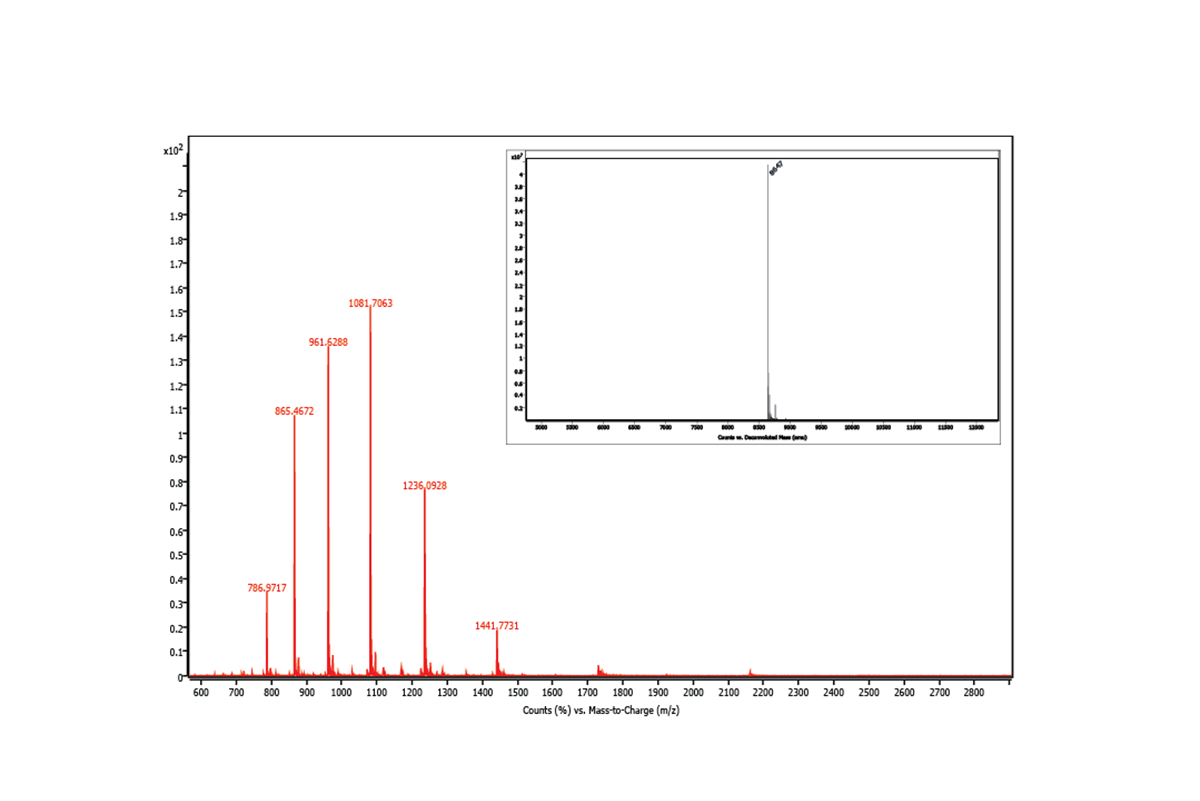
Mass Spectrometry
Researchers
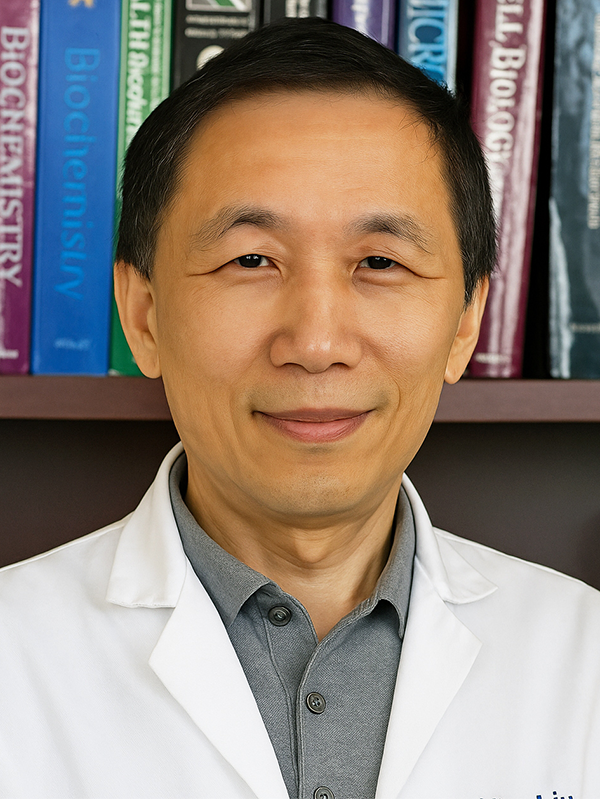



The Bartman lab aims to target the metabolism of cancer and immune cells to treat disease. Both cancer and immune cells have extreme metabolism, compared to other adult tissues- for example they proliferate and they take up glucose avidly. However, there are few therapies targeting metabolism to treat cancer and autoimmunity, in part because other altered metabolic pathways have not been identified. We aim to identify metabolic fluxes altered in immune or tumor cells, then use genetic and pharmacologic approaches to target these pathways to improve tumor clearance. A key approach we use is infusing heavy non-radioactive metabolic tracers, and then performing mass spectrometry to measure tissue and cell type metabolism.




- How does genetic inheritance actually work?
- How was epigenetic information transmitted to us from our parents?
- Can building new artificial chromosomes help us understand how natural chromosomes work?
- How are the key enzymes protecting the integrity of our genome specifically and potently activated by potential catastrophes like DNA breaks or chromosome misattachment to the mitotic spindle?

Related people
Publications
Abstract
Abstract
Abstract
Summary
Hershey and Chase used bacteriophage T2 genome delivery inside Escherichia coli to demonstrate that DNA, not protein, is the genetic material. Seventy years later, our understanding of viral genome delivery in prokaryotes remains limited, especially for short-tailed phages of the Podoviridae family. These viruses expel mysterious ejection proteins found inside the capsid to form a DNA-ejectosome for genome delivery into bacteria. Here, we reconstitute the phage T7 DNA-ejectosome components gp14, gp15, and gp16 and solve the periplasmic tunnel structure at 2.7 Å resolution. We find that gp14 forms an outer membrane pore, gp15 assembles into a 210 Å hexameric DNA tube spanning the host periplasm, and gp16 extends into the host cytoplasm forming a ∼4,200 residue hub. Gp16 promotes gp15 oligomerization, coordinating peptidoglycan hydrolysis, DNA binding, and lipid insertion. The reconstituted gp15:gp16 complex lacks channel-forming activity, suggesting that the pore for DNA passage forms only transiently during genome ejection.
Abstract
Abstract
Abstract
Abstract
Abstract
Abstract
Abstract
Abstract
Abstract
Abstract
Abstract
Abstract
Abstract
Abstract
Abstract
Abstract
Abstract
Abstract
Abstract
Abstract
Abstract
Abstract
Abstract
Abstract
Abstract
Abstract
Conclusions
The last 6 years brought a remarkable progress in our understanding of the structural basis of the physiological regulation and pharmacology of the epithelial Ca2+ channels TRPV5 and TRPV6. The overall architectures of these channels determined by three different laboratories, are very similar to each other, and also similar to other channels in the TRPV family. There is also a clear agreement in the molecular mechanism of channel inhibition by the endogenous protein modulator CaM, three structures from three laboratories showing essentially the same binding mode and pore block in both TRPV5 and TRPV6. The structures determined so far show less agreement on how pharmacological small molecule inhibitors and the endogenous ligand PI(4,5)P2 bind to and activate these channels. Future work with higher resolution structures will likely shed light to whether these discrepancies reflect inherent differences between these channels, or caused by differences in experimental conditions between different laboratories.
Abstract
Abstract
Abstract
Activation of TRPV5 and TRPV6 by CoA species requires a long acyl chain
We studied the effect of long-chain acyl-CoA (LC-CoA) in excised inside-out patches on the rabbit TRPV5 and the human TRPV6 channels expressed in Xenopus laevis oocytes. These channels are known to require PI(4,5)P2 for activity15,17. Since LC-CoA and PI(4,5)P2 have structural similarities such as three phosphate groups in the head group and one or two acyl chains (Fig. 1a, b), we hypothesized that LC-CoA can substitute for PI(4,5)P2 in supporting TRPV5 and TRPV6 activity. To test this hypothesis, we examined the effect of different types of fatty acyl-CoA on both TRPV5 and TRPV6 (Fig. 1). As a control, water-soluble diC8 PI(4,5)P2 was used to reversibly activate the channels. Table 1 shows six different fatty acyl-CoA species used in the current study. Their names are represented as (chain length: number of the double bonds), for instance, octanoyl-CoA is denoted as C8:0 CoA.